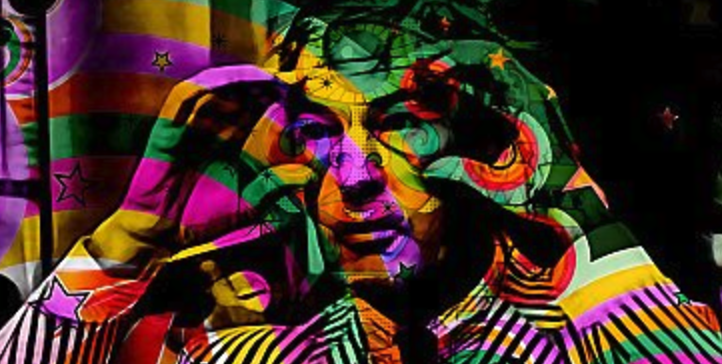
Dr. Timothy Leary remains one of the most controversial and influential figures of the 20th century, a psychologist turned countercultural icon who reshaped the discourse around consciousness, freedom, and human potential. Born in 1920 in Springfield, Massachusetts, Leary began his career as a respected academic, earning a Ph.D. in psychology from the University of California, Berkeley, and teaching at Harvard University. However, his later exploration of psychedelics would catapult him into fame—and infamy.
The Harvard Psychedelic Project
Leary's journey into the world of psychedelics began in the early 1960s when he encountered psilocybin mushrooms during a trip to Mexico. Intrigued by their transformative effects on consciousness, Leary launched the Harvard Psilocybin Project alongside colleague Richard Alpert (later known as Ram Dass). Together, they studied the psychological and spiritual effects of psilocybin and LSD, believing these substances held potential for personal growth, creativity, and the treatment of mental illness.
Their experiments, though groundbreaking, were controversial. Critics questioned the scientific rigor of their methods, and the project was eventually shut down. Harvard dismissed Leary in 1963, marking the beginning of his transition from academic to counterculture leader.
“Turn On, Tune In, Drop Out”
Leary’s most famous phrase, “Turn on, tune in, drop out,” became a mantra for the 1960s counterculture. He advocated for the use of psychedelics as a means of expanding consciousness and breaking free from societal constraints. His charismatic presence made him a hero to many in the anti-establishment movement, but it also drew the ire of authorities. Leary was arrested multiple times for drug possession, and his advocacy for LSD made him a target of the Nixon administration, which labeled him “the most dangerous man in America.”
Legacy and Influence
Leary’s work has had a lasting impact, despite his controversial methods and persona. He was among the first to recognize the potential of psychedelics to explore the human mind, an idea that has gained renewed scientific interest in recent years. Today, institutions like Johns Hopkins and Imperial College London are conducting rigorous studies on psychedelics for treating depression, PTSD, and other mental health issues—validating many of Leary’s early claims.
Beyond his contributions to psychology, Leary was a futurist and technophile who embraced emerging technologies, including computers and virtual reality, as tools for expanding human potential. His work continues to inspire researchers, psychonauts, and advocates of personal freedom.
The Revolutionary Spirit
Timothy Leary was as polarizing as he was visionary. Critics often dismissed him as reckless, but his willingness to push boundaries sparked a revolution in how we think about the mind and its potential. His legacy lives on in the resurgence of psychedelic research and the ongoing exploration of consciousness—a testament to his unrelenting quest to help humanity "turn on" to its deeper possibilities.
Books by Dr. Timothy Leary
The Psychedelic Experience: A Manual Based on the Tibetan Book of the Dead (1964)
High Priest (1968)
The Politics of Ecstasy (1968)
Turn On, Tune In, Drop Out (1967)
Confessions of a Hope Fiend (1973)
Neurologic (1973)
Exo-Psychology (1977)
Info-Psychology: A Manual on the Use of the Human Nervous System (1977)
What Does Woman Want? (1976)
Flashbacks: A Personal and Cultural History of an Era (1983)
Chaos and Cyberculture (1994)
Your Brain Is God (2001, posthumous)