
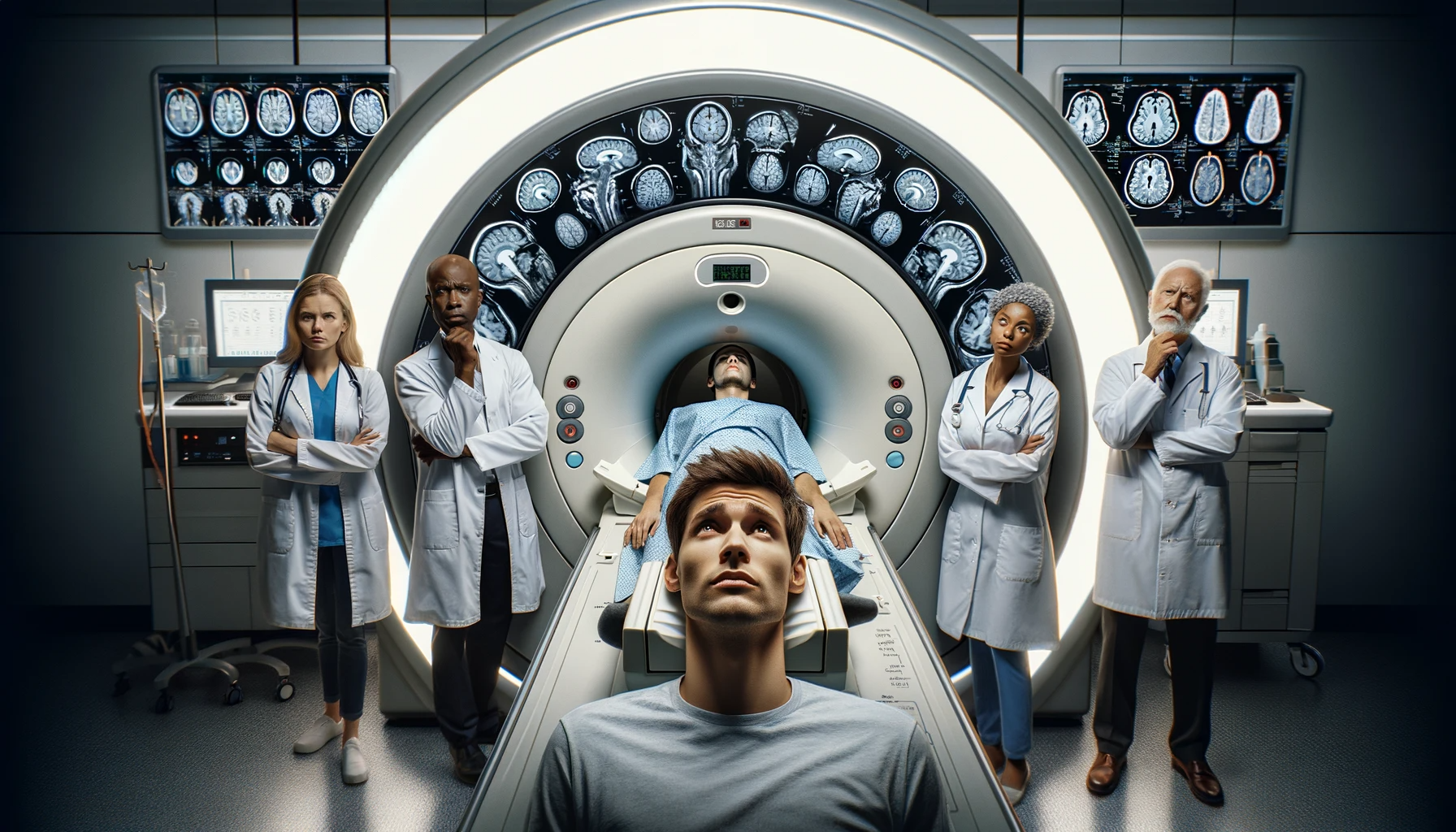
The "hard problem of consciousness" is a term coined by philosopher David Chalmers in 1995, and is now a central theme in the philosophy of mind. It focuses on the question: why and how do some physical processes in the brain give rise to subjective experiences? This question probes the nature of experiences such as the feeling of seeing the color red, the sensation of pain, or the experience of enjoying music. These experiences, referred to as "qualia," represent the core of the hard problem.
In contrast to the "easy problems" of consciousness (such as understanding how the brain processes sensory information or integrates signals to coordinate a response), the hard problem is unique. The easy problems, despite their complexity, are believed to be solvable within the existing frameworks of neuroscience and psychology. They deal with the mechanisms and processes that explain the functioning of consciousness. The hard problem, however, asks why and how these processes are accompanied by a subjective experience. Why isn't all processing done "in the dark" without any accompanying sensation?
This inquiry challenges the foundations of our understanding of nature and reality. Physicalism, or the belief that everything can be explained in terms of physical processes, struggles to explain why subjective experiences arise from physical processes in the brain. This has led to the exploration of various other theories. Dualism, for instance, posits that there are both physical and non-physical aspects of consciousness, but this theory struggles to explain how these two realms interact. Other theories, like panpsychism, propose that consciousness might be a fundamental and ubiquitous feature of the physical world, but this idea raises questions about the nature of consciousness in inanimate objects.
The hard problem of consciousness is not just a theoretical conundrum; it has practical implications as well. It plays a crucial role in our understanding of mental health, informs the development of artificial intelligence and machine learning, and raises ethical questions regarding the treatment of animals and other beings. The hard problem pushes us to consider whether machines could ever be conscious, what it means to be conscious, and how we define the moral and ethical boundaries of consciousness.
Despite decades of research and debate, the hard problem of consciousness remains unresolved. It continues to be a topic of intense debate and speculation among philosophers, neuroscientists, and psychologists. The challenge lies in bridging the gap between objective observations of the brain and the subjective nature of experience. As of now, the hard problem remains a frontier in our understanding of the human mind, representing one of the most profound mysteries in both philosophy and science.