
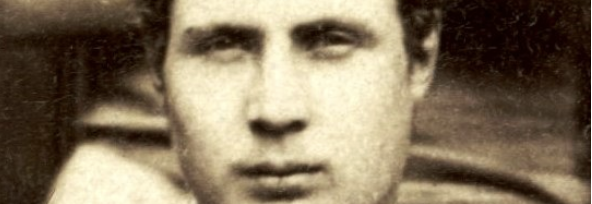
Alfred North Whitehead (1861–1947) came to philosophy by an unusual route. He had already spent four decades as a mathematician, co-authoring with Bertrand Russell the three volumes of Principia Mathematica, an attempt to derive arithmetic from logic that remains one of the most demanding works of the twentieth century. Then, at sixty-three, an age at which most academics are winding down, he accepted a chair at Harvard and began the philosophical work he is now remembered for.
The Bifurcation of Nature
Whitehead's starting complaint was that modern thought had quietly cut nature in two. On one side sat the real world described by physics: particles, fields, measurable quantities. On the other sat everything else — color, warmth, beauty, the feel of a summer evening — demoted to appearances occurring somewhere inside a human skull. He called this the bifurcation of nature and regarded it as a disaster, because it leaves us with a physical world nobody has ever actually encountered and a lived world with no standing in the account.
He paired it with what he named the fallacy of misplaced concreteness: mistaking a useful abstraction for the concrete thing itself. A map is indispensable and a map is not the ground. Much of what passes for hard-headedness, he thought, is this fallacy worn with confidence.
Experience Organization names the two halves of the cut and, more importantly, says which way round they go. Extensional Space is the primary field of experience: the condimensional horizon in which memory, imagination, anticipation, relationship, cultural meaning and possibility are all present at once. Local Space is what that field looks like once it has been scoped — the "here and now" produced when attention gathers on the physical information arriving from the environmental surround. A measuring instrument performs the same narrowing; so does a retina. The measurement does not discover Local Space, it produces it.
Put that beside Whitehead and the bifurcation stops being merely a split and becomes a split with a ranking error inside it. The modern settlement assumes matter is primary and meaning derivative — Local first, Extensional second. EO holds the reverse: Extensional Space is the field, Local Space is the aperture, and the aperture is not the ground. Whitehead's "physical world nobody has ever encountered" is precisely Local Space mistaken for the whole, and his fallacy of misplaced concreteness is what taking the aperture for the field amounts to.
Occasions of Experience
His repair was radical. Rather than beginning with enduring bits of matter and asking how experience could ever arise from them, Whitehead began with events. The basic unit of reality in Process and Reality (1929) is the actual occasion: a momentary happening that takes up the occasions before it, integrates them into a definite unity, contributes itself to what follows, and perishes.
He called this taking-up prehension, and the integration concrescence — a growing-together. Crucially, an occasion is not a thing that has experience. It is an occasion of experiencing, however faint. Reality is not made of stuff that sometimes feels; it is made of feelings that sometimes congeal into what we call stuff.
This is why process philosophers speak of Whitehead's universe as experiential all the way down. It is not the claim that rocks have opinions. It is the claim that the capacity to take account of a situation and form something from it does not appear from nowhere at some late stage of evolution — it is the basic gesture of existing at all.
EO works the same structure at the scale of a life. An Experience Organization is a single organizing of experience — one pattern by which a moment is assembled into the shape it has. The Priorga is the standing field those organizings compose: a contraction of prior and organizing, it is the previously-and-continuously organizing that has already happened and goes on happening beneath awareness, determining which experiences, possibilities and limitations can arise at all. It operates as a continual looking and listening for what is already expected, so that perception keeps returning the world the field has already organized.
That is Whitehead's prehension described from the inside. Each occasion inherits its predecessors; the past is not behind the present but taken up into it as the material the moment is made from. The Priorga is what that inheritance feels like when the occasions are someone's: not a memory consulted, but the felt givenness of how the world shows up before any deliberate interpretation begins. Whitehead supplies the metaphysics of a moment that arrives already furnished. EO names the furnishing and, because it is an activity rather than a structure, treats it as something that can be seen and organized otherwise.
Process Before Substance
Underneath is a simple inversion with large consequences. The Western default treats things as primary and change as what happens to them. Whitehead treats process as primary and things as the relatively stable patterns a process holds for a while. A river is not a thing that flows. The flowing is the river, and "river" is our name for a pattern that persists.
Apply that to a person and the picture shifts. A self is not an object that undergoes experiences; it is a route of experiencing with enough continuity to be recognizable. What endures is a form of organization, not a substance.
EO turns that inversion into a working method, and calls it Process-Phenomenology. The hyphen carries two requirements held together. The process requirement takes organized appearing-in-motion as primary rather than static substance, so that what gets described is always something happening rather than something standing. The phenomenological requirement begins from what shows itself, describing how experience is constituted instead of positing machinery behind it. Together: describe experience as it moves, and only as it shows.
The discipline is stricter than it sounds, and the strictness is the point. Ruling out appeals to what might lie behind the appearances also rules out treating a person as a fixed kind of thing — because a fixed thing is exactly what cannot be found by describing motion. What can be found is an organizing, and an organizing that has been seen can be organized otherwise. Whitehead's metaphysics is what makes that sentence coherent rather than wishful: if selves were substances there would be nothing to reorganize.
Why He Still Matters Here
Whitehead matters to EO three times over, and each time at a different level.
As ontology, he repairs the bifurcation that EO's account of Extensional and Local Space is built to correct. His argument that the lived world is not a secondary appearance occurring inside a skull is the philosophical case for treating the Extensional field as primary and the located here-and-now as a narrowing of it.
As structure, his actual occasion gives the general form of what EO observes in particular. A moment that takes up what came before, integrates it, and hands something on is the Priorga working — the difference being that Whitehead is describing the fabric of reality and EO is describing a person's day.
As method, he underwrites Process-Phenomenology. Taking process as prior to substance is what licenses the whole EO vocabulary of organizings rather than traits, and with it the central claim that an organization once seen can be organized otherwise.
He is not easy. Process and Reality invents its own vocabulary and repays slow reading. Science and the Modern World (1925) and Modes of Thought (1938) are the better doors in, and both are worth the time.
Books by Alfred North Whitehead
An Enquiry Concerning the Principles of Natural Knowledge (1919)
The Concept of Nature (1920)
Science and the Modern World (1925)
Religion in the Making (1926)
Symbolism: Its Meaning and Effect (1927)
Process and Reality (1929)
The Aims of Education and Other Essays (1929)
Adventures of Ideas (1933)
Modes of Thought (1938)